What is industrial style in an HDB context
Industrial design is often associated with old New York warehouses, oversized windows, exposed structure, and a “function-first” attitude. In an HDB flat, the goal is not to mimic a warehouse. The goal is to borrow the same principles, honest materials, clean lines, and purposeful detailing, then adapt them for compact, air-conditioned, real-life Singapore living.
When it is done well, industrial style looks intentional, not unfinished. It feels grounded and characterful, not cold.
Key characteristics of industrial design
Raw textures and materials
Concrete or cement-look surfaces, metal detailing, weathered timber, and surface-mounted conduits or trunking that looks deliberate and neat.
Neutral, urban palette
Greys, black, and white form the base. Warmth comes from timber, leather tones, and soft textiles.
Open sightlines
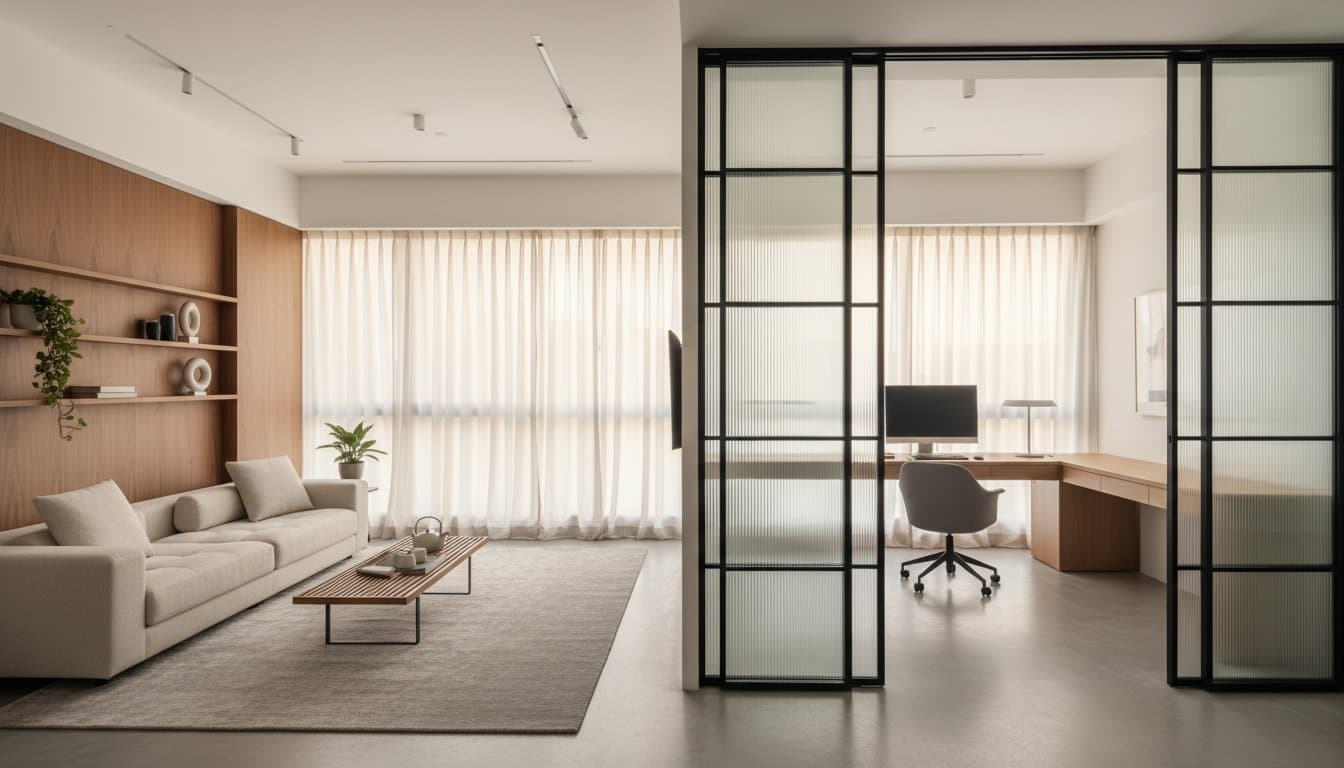
You do not need to hack everything to achieve an industrial feel. The “open” effect can also come from smart zoning, glass partitions, and better visual flow.
Utilitarian lighting and fixtures
Track lighting, metal pendants, and hardware that looks engineered to work hard.
Why it works well in HDB flats
It can make layouts feel larger
Industrial style rewards cleaner sightlines and better zoning, which helps compact homes feel more spacious.
It is practical by nature
Many industrial finishes are chosen for durability and easier day-to-day upkeep.
It encourages better curation
This aesthetic naturally pushes you towards fewer, stronger pieces and less visual clutter.
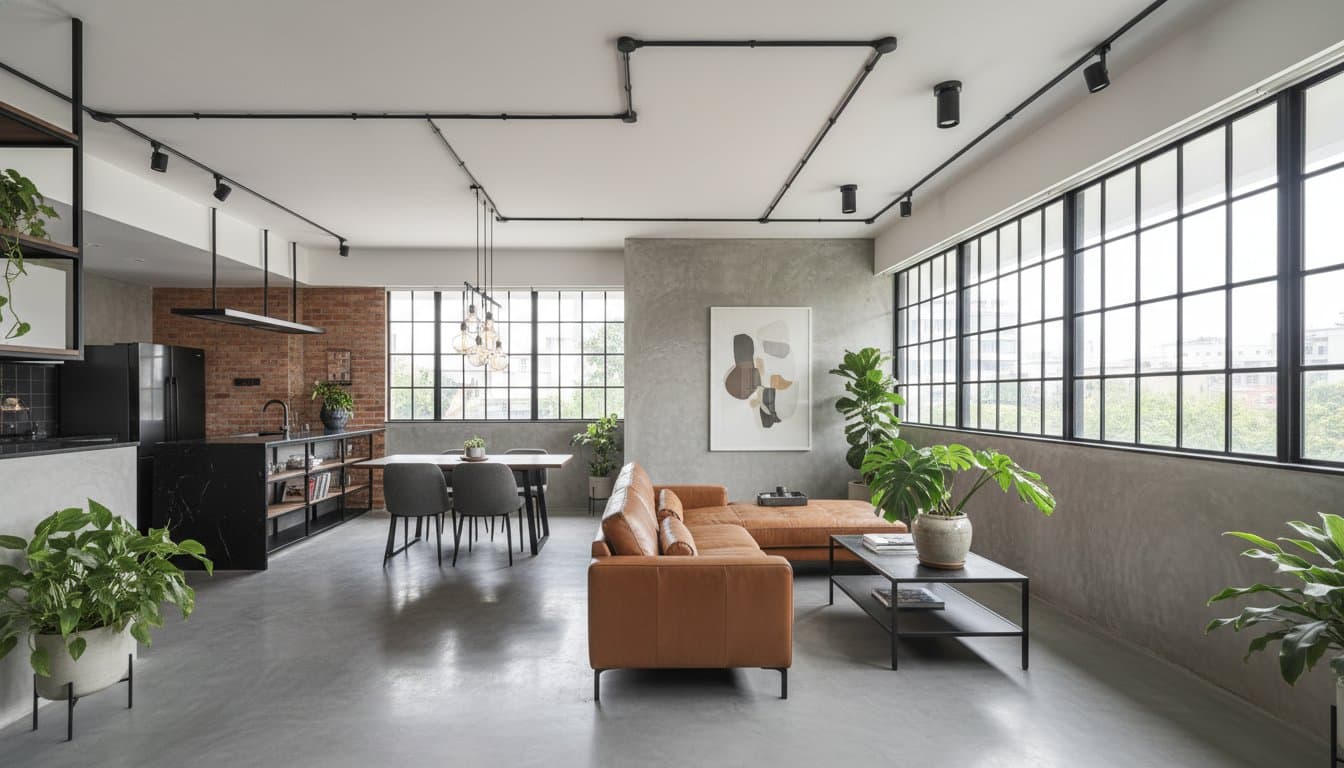
 Homeowners are moving towards a new interpretation of the industrial style, adding a dash of sophistication and elegance to a conventionally rough and cold setting. Image by Young Lim.
Core elements toolkit: materials, colours, lighting, furniture
Materials and raw textures
Concrete-look floors and walls
A raw cement screed look is iconic, but many homeowners prefer concrete-effect porcelain tiles for a cleaner finish and simpler maintenance. Hafary, for instance, carries multiple concrete-effect tile collections suitable for floors and walls.
Wet area note
If you are redoing bathroom or toilet flooring, HDB’s renovation guidance highlights the use of pre-packed waterproofing screed and a waterproofing membrane before laying new floor finishes. Build your design around these realities, not against them.
Brick-look feature walls
In apartments, lightweight brick veneers are typically more practical than real brick. Consider veneer panels for a feature wall to get the loft vibe without unnecessary complications.
Surface-mounted conduits and trunking
Do not describe this as “exposed wiring”. In a proper industrial home, it is a controlled, surface-mounted look with tidy routes and safe installation.
Colour palette: shades of the city, with warmth built in
Neutral foundation
Work with layered greys, crisp whites, and disciplined black accents.
Warm counterbalance
Bring in timber tones, leather hues, and tactile textiles so the home feels inviting at night.
Matte black accents
Use matte black consistently across lighting tracks, handles, frames, and fittings so the look stays cohesive.
Lighting and furniture: form meets function
Track lights are popular because they are adjustable and clean-lined. Pair them with warmer bulbs so the home does not feel harsh at night. (Warm white lighting is commonly around 2700K to 3000K, but choose what feels comfortable to your eyes.)
Furniture
Look for honest materials and simple silhouettes: timber tops with metal legs, open shelving, and upholstered pieces that soften hard surfaces.
Room-by-room guide
Living and kitchen: open sightlines, smart zoning
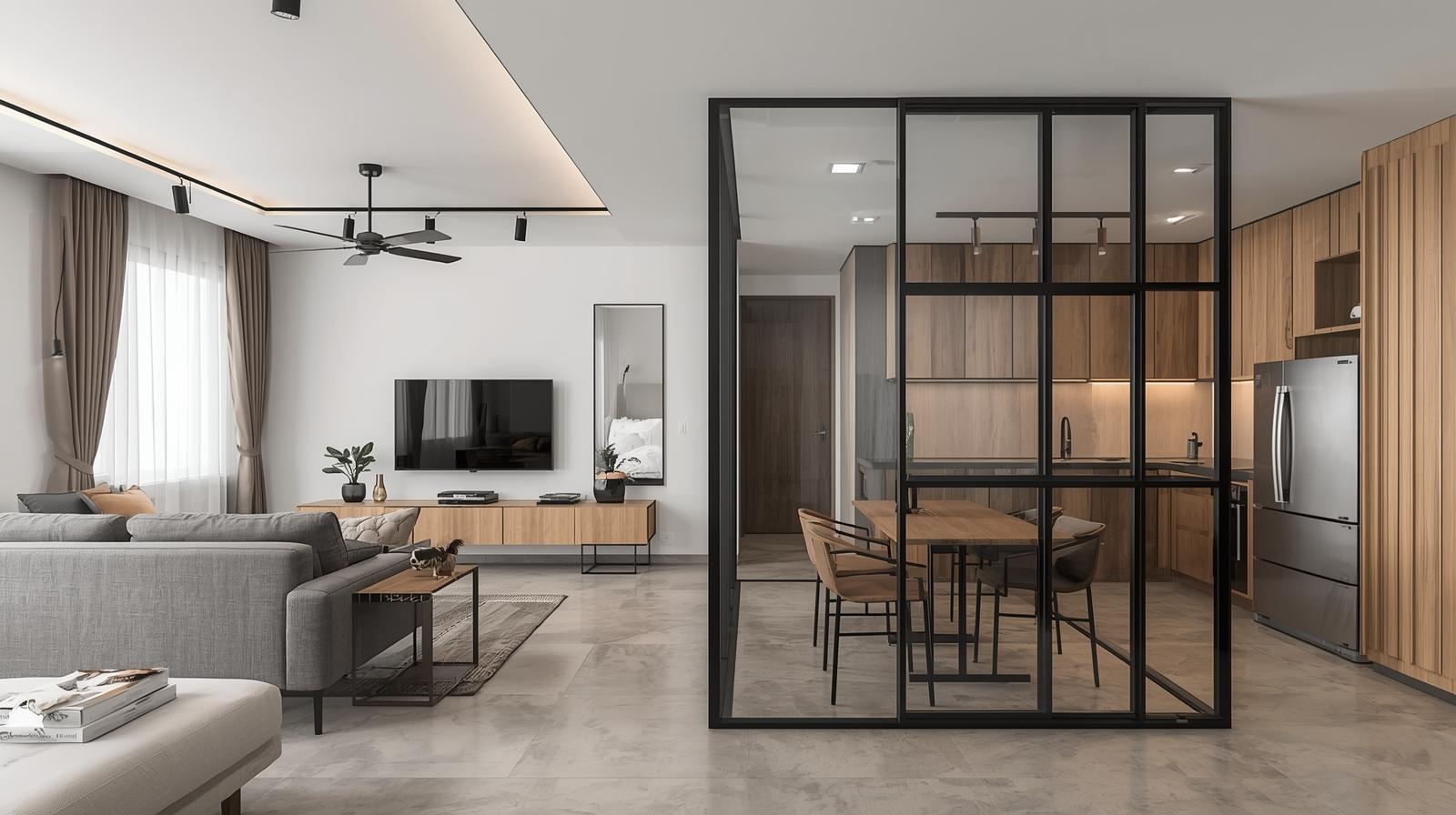
Instead of heavy walls, consider black-framed glass panels to define zones while letting light travel through the home. This delivers the industrial look and keeps your flat feeling airy.
Living area
Choose a comfortable sofa in leather tones or durable fabric, then soften the scene with a rug and cushions. Industrial style should still feel like a home, not a showroom.
Kitchen
You can reference a “commercial” vibe through stainless steel accents, black hardware, and industrial lighting, without forcing the entire kitchen into cold metal. If you are adding an island or peninsula, treat it as both function and social hub.
Bedroom: industrial, but restful
A cement-look or brick-look feature wall can be your anchor. Then do the important work: soften it. Warm bedding, gentle lighting, timber side tables, and a restrained palette will keep the room calming. This is where many industrial bedrooms fail, they go too hard on grey and forget comfort.
Bathroom and service yard: utilitarian, not harsh
Dark tiles and matte black fittings can look sharp, but only if lighting is adequate and finishes are easy to clean. Keep shower screens visually light and choose fittings that are durable. If you want a concrete vanity look, confirm sealing and water exposure requirements with your contractor.
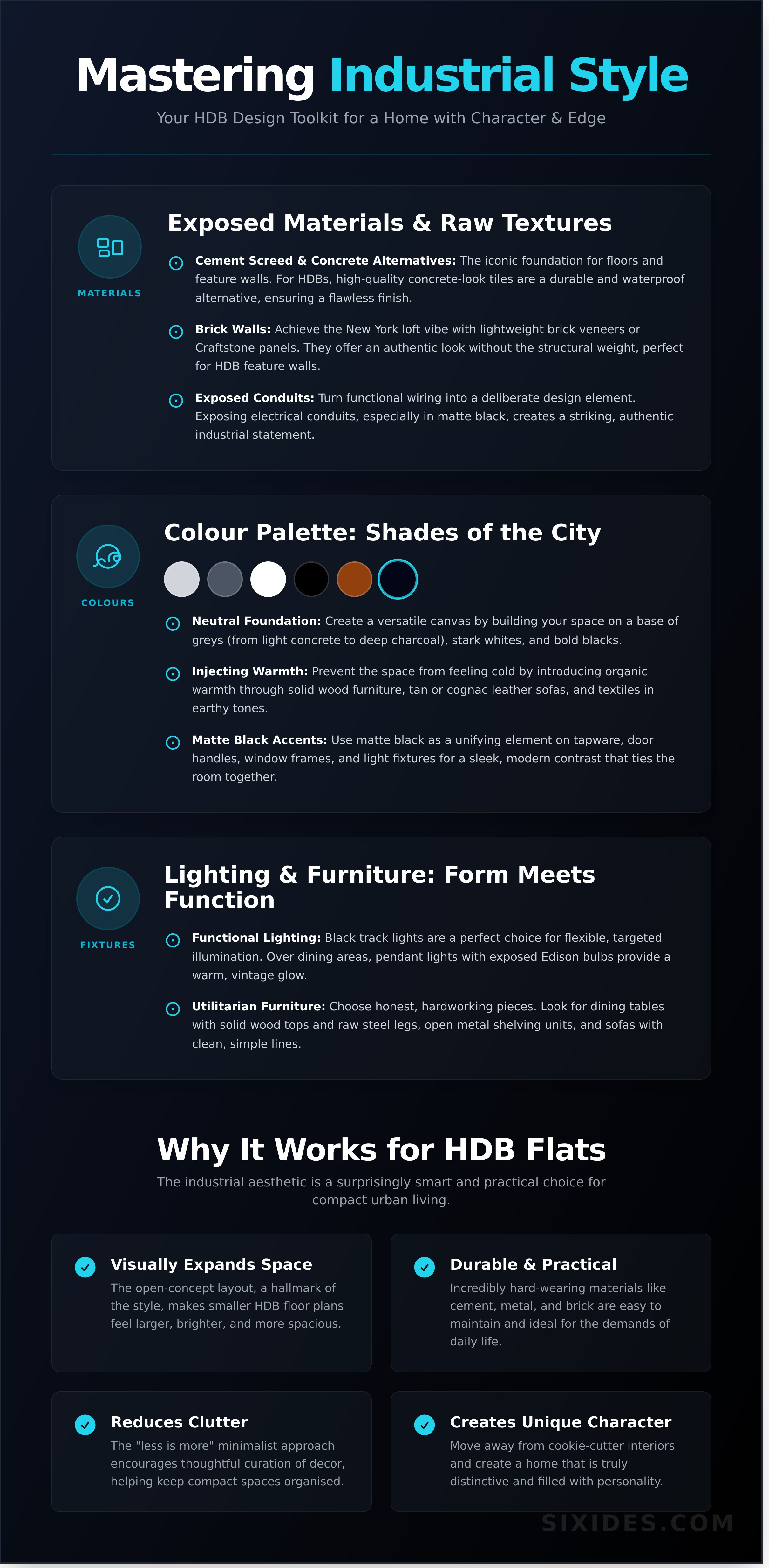 Keep this guide on hand to help you keep to your goal of giving your interiors an industrial vibe. Image by Young Lim.
Common challenges and how to fix them
Concern: “It will look too cold.”
Fix it with contrast: rugs, textured bedding, cushions, warm-toned timber, and layered lighting. A few warm elements, repeated consistently, will transform the mood.
Concern: “It will be too dark for an HDB.”
Keep ceilings bright, use mirrors strategically, and avoid overloading the home with charcoal on every surface. Industrial is not a licence to turn off the lights.
Concern: “My space is small and my ceiling is low.”
Choose furniture with visible legs, keep storage streamlined, and prioritise cleaner sightlines. Bulk is the enemy in compact flats.
HDB rules and practical considerations
If you are hacking walls, changing floor finishes in wet areas, or doing works that affect the structure or waterproofing, align early with HDB renovation requirements and permit processes. HDB’s renovation guidance and building works guidelines set out key constraints and best practices, including wet area waterproofing requirements.
Your safest move is to work with an interior designer or contractor who is experienced with HDB workflows and compliance.
Choosing the right interior designer for your industrial HDB
Industrial style looks effortless only when it is executed with discipline. Ask questions that reveal whether the designer understands both aesthetics and real-life usability.
Designer interview questions
- How do you keep an industrial home warm and comfortable at night?
- What is your approach to HDB-approved hacking and permit requirements?
- Which finishes do you recommend for a concrete look that is durable and low maintenance?
- How do you route surface-mounted conduits so they look intentional, neat, and safe?
- How do you plan lighting layers so the home does not feel dim or harsh?
Portfolio checklist
- Relevant experience across multiple HDB projects
- Strong lighting outcomes in darker palettes
- Storage that is integrated, not an afterthought
- Clean workmanship detailing at corners, trims, joints, and edges
FAQs
Is industrial interior design expensive to achieve in an HDB flat?
It can be cost-effective if you focus on a few hero elements and keep the build practical. Costs rise when you add extensive hacking, custom metalwork, or high-spec surfaces. As a rough guide, recent Singapore estimates often place a four-room HDB renovation around $51,000 to $61,800 for a BTO, and $64,300 to $80,300 for a resale, depending on scope and materials.
How can I prevent an industrial-style home from feeling too dark?
Maximise daylight, keep ceilings bright, use mirrors to bounce light, and layer lighting so you are not relying on one harsh source. Add timber tones and soft textiles to lift the mood.
What are the best flooring options besides cement screed?
Concrete-effect porcelain tiles are popular for the look with easier maintenance. Hafary lists multiple concrete-inspired tile collections suitable for floor and wall applications.
Vinyl can also work for a warmer feel underfoot, especially in bedrooms, as long as you choose a tone and texture that looks credible.
Is industrial style suitable for families with young children?
Yes. Prioritise rounded edges where possible, use larger rugs for safer play zones, and choose durable finishes that are easy to wipe down.
How long does an industrial-themed HDB renovation take?
Many full-home renovations sit around two to three months, but it depends on hacking scope, carpentry complexity, and approvals. A seasoned firm will give you a realistic timeline and a clear sequence of works.
Can I mix industrial design with Scandinavian or minimalist styles?
Yes. Scandustrial blends industrial textures with light woods and cosy textiles. Industrial-minimal works when you keep the palette tight and let a few rugged elements do the talking.