Singapore is unusual.
In most cities, interior design is a luxury.
Here, it has quietly become infrastructure.
That difference matters more than we realise.
How HDB Shaped Renovation in Singapore
Public housing in Singapore was designed as a core housing solution, not a stopgap.
It made home ownership:
- accessible
- scalable
- socially stabilising
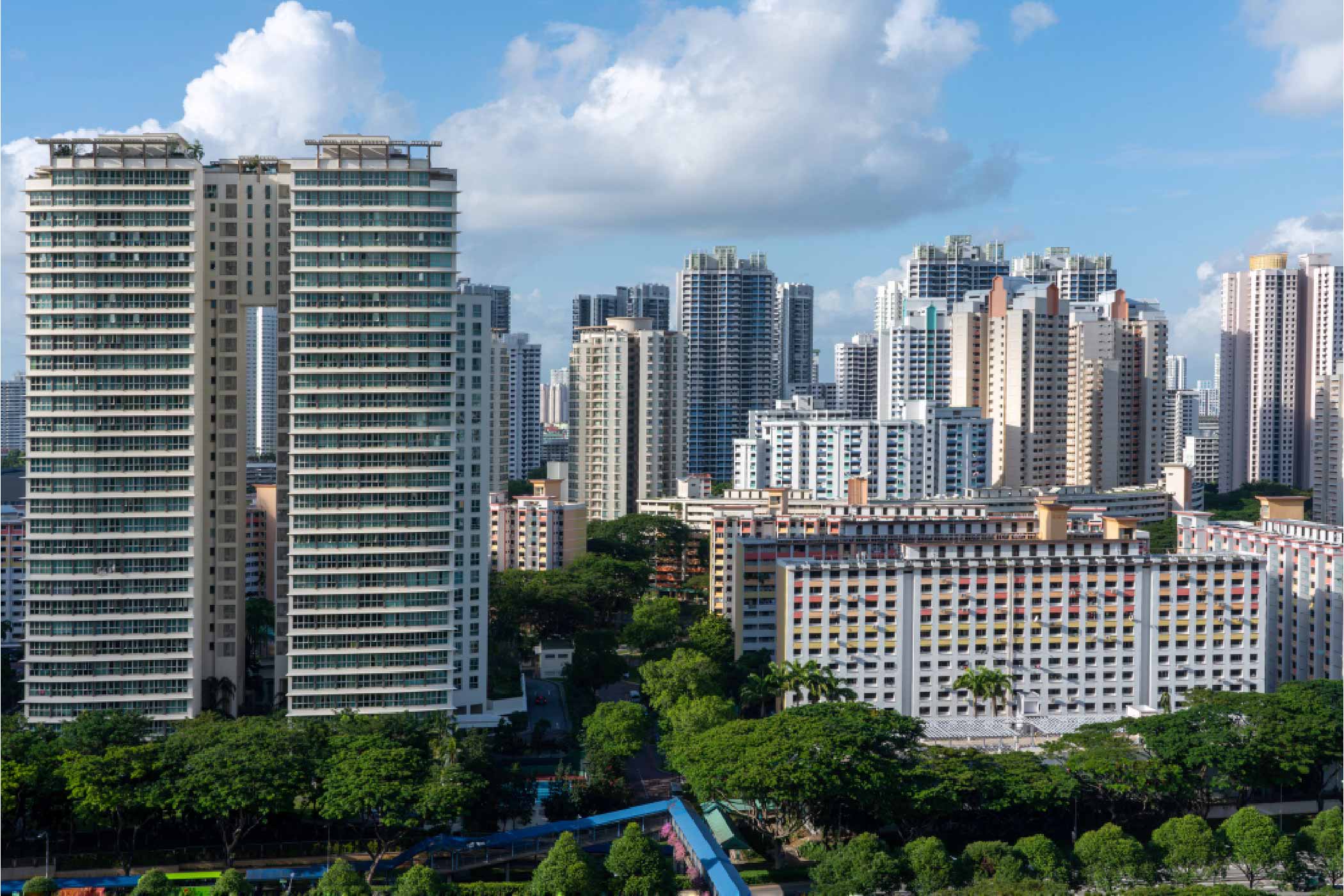
When more than 80% of the population lives in HDB flats, renovation stops being niche. It becomes a mass-participation exercise. This scale is what makes renovation regulation in Singapore uniquely complex.
And once renovation becomes mass-market, every assumption about design, cost, and regulation shifts with it.
Within the same HDB estate, you will find:
- first-time homeowners stretching their finances
- families upgrading cautiously
- retirees managing CPF drawdowns
- higher-income households choosing HDB by preference
They share lifts, corridors, walls and void decks. But they do not share the same financial headroom.
Any renovation system that serves this reality must accommodate wildly different budgets, not just different tastes.

Why Interior Design Is Not Tightly Regulated in Singapore
Every year, there are thousands of renovation-related complaints in Singapore.
So the question inevitably arises:
“Why isn’t interior design more tightly regulated?”
Because renovation is inseparable from housing affordability.
Tight regulation feels comforting, until you trace the downstream effects:
- higher compliance costs
- higher entry barriers
- fewer operators
- higher renovation prices
At that point, renovation stops being a consumer issue and becomes a grassroots one.
We have seen similar trade-offs before. Mandating higher operational standards across the board often raises construction costs. And construction costs eventually land on homeowners.
Renovation operates under the same compromise logic.
How Market Pressure Shapes the Renovation Industry in Singapore
To meet a mass market with limited regulatory friction, the industry adapts.
You see:
- premium studios serving a small segment
- mid-tier firms balancing cost and service
- contractors rebranding as designers
- designers competing on price instead of process
On the surface, this looks like choice.
In reality, it creates downward pressure on a discipline that was never meant to be cheap.
When interior design operates within a mass-market housing ecosystem, price becomes the dominant filter. And when price dominates, process compresses.
That compression is where tension begins.
Why There Is No Licensing Requirement for Interior Designers in Singapore
One of the most common complaints homeowners raise is this:
“These designers aren’t real designers.”
And in many cases, that is factually true.
In Singapore:
- there is no licensing requirement to call oneself an interior designer
- formal design training is not mandatory
- entry into the role is largely market-driven
But here is the uncomfortable counter-question:
What happens if every renovation project were required to engage a formally trained interior designer?

The Economic Impact of Licensing Interior Designers in Singapore
A properly trained interior designer brings:
- years of education
- fewer concurrent projects
- higher liability
- deeper involvement across design, coordination and detailing
All of this immediately changes the business model.
To sustain that talent, firms would need:
- higher base fees
- fewer projects per designer
- longer timelines
- clearer scopes
- higher homeowner budgets
In other words, renovation in Singapore would no longer behave like a mass-market service.
It would become more expensive, slower and less accessible, especially for HDB homeowners operating within tight financial limits.
The Trade-Off Between Affordability and Regulation in Singapore Renovation
So the system settles into a compromise:
- not every “designer” is formally trained
- design is often bundled, not itemised
- experience substitutes credentials
- ambiguity substitutes depth
This is not ideal.
But it is not accidental either.
It is the outcome of trying to make a luxury discipline serve a mass housing model without pricing most people out of the market.
Why Renovation Disputes Happen in Singapore
Most homeowners are not unreasonable.
Most renovators are not dishonest.
The friction comes from a structural mismatch:
- design treated like a commodity
- construction treated like a product
- contracts expected to resolve interpretation
- cost treated as the primary differentiator
When renovation disputes happen in Singapore, they often stem from unclear scopes, documentation gaps and mismatched expectations rather than regulation alone.
For homeowners navigating this complexity, structured comparison and transparency matter. Compare verified interior designers in Singapore.
Understanding realistic renovation cost ranges early can also prevent misalignment. Renovation cost calculator in Singapore
Regulation alone cannot close expectation gaps. Clarity can.

The Nerd’s Take
Renovation in Singapore looks the way it does because of a series of deliberate trade-offs.
Loose regulation preserves access.
Lower barriers preserve affordability.
Mass participation dilutes specialisation.
You cannot optimise all three without consequence. Until we acknowledge that, renovation in Singapore cannot be simultaneously:
- cheap
- fast
- universally accessible
- fully professionalised
- tightly regulated
- dispute-free
We will keep having the same conversations, just louder each time.
HDB succeeded because it standardised housing without standardising lives.
Renovation struggles because it asks design, a nuanced, human discipline, to operate at industrial scale.

The Future of Interior Design Regulation in Singapore
The next phase of Singapore’s renovation conversation should not be about blame or outrage.
It should be about maturing the system.
That means accepting that renovation, like housing, sits on a delicate balance between access, affordability and professionalism. Pushing too hard on any one lever will move the others.
The way forward is not to make renovation more exclusive or more permissive, but more legible:
- clearer scopes
- clearer expectations
- clearer responsibilities
- clearer trade-offs
Structured safeguards that protect deposits and improve transparency can strengthen trust without over-regulating the industry.
Renovation deposit protection scheme
If HDB was about giving Singaporeans a place to live, then the next chapter of renovation should be about giving them tools to navigate complexity without pricing them out of the system designed to include them.
And that is what we aim to address with SIXiDES.
Frequently Asked Questions About Interior Design Regulation in Singapore
Is interior design regulated in Singapore?
Interior design is not tightly regulated in Singapore. There is no mandatory licensing requirement to call oneself an interior designer, although structural works remain governed by HDB regulations.
Why are there many renovation complaints in Singapore?
Renovation complaints often arise from unclear scope, documentation gaps and expectation mismatches rather than regulation alone.
Does HDB regulate renovation works?
HDB regulates structural, hacking, waterproofing and safety-related works, but it does not regulate design qualifications.
Would stricter regulation increase renovation costs in Singapore?
Stricter licensing and compliance requirements would likely raise entry barriers and operational costs, which may increase renovation prices.
How can homeowners reduce renovation risk?
Homeowners should prioritise scope clarity, documentation, realistic budgeting and transparent contractor comparison before engagement.