
If you’re Googling 5-room BTO renovation cost Singapore, you’re really asking two questions: what is a sensible budget, and what exactly can cause it to balloon. A five-room BTO gives you more space to live, but also more surfaces to finish and more storage temptations to build. The good news is that BTO renovations can be more predictable than resale, because you usually avoid heavy hacking and surprise rewiring. The bad news is that “predictable” still isn’t the same as “cheap”.
What is the typical 5-room BTO renovation cost in Singapore?
Most Singapore cost guides and budgeting articles place a 5-room BTO renovation in the broad band of around $40,000 to $70,000 for a fairly typical, move-in-ready scope, with higher totals once you push for heavier customisation, more carpentry, or more wet-area works.
Here’s the practical way to interpret that range:
- Lower end tends to mean controlled carpentry, minimal hacking, and practical finishes.
- Mid range is where most first-time homeowners land once they add full-height wardrobes, a TV feature, better lighting planning, and some bathroom or kitchen upgrades.
- Above that is usually a deliberate choice: premium surfaces, extensive built-ins, more layout changes, and higher detailing.
The three biggest cost drivers (the ones that move your quote the most)
Carpentry volume
Carpentry is often the biggest line item in a five-room flat simply because there are more rooms to “complete”. It is also where scope creep happens fastest: one extra cabinet becomes three, then becomes a feature wall, then becomes “since we’re already doing it…”.
Quick sense-check:
- If your quote feels surprisingly low, scrutinise carpentry specifications and what is excluded.
- If it feels surprisingly high, check whether you’re paying for premium internal fittings, special laminates, or truly large runs.
Wet works ambitions (kitchen and bathrooms)
Wet areas cost more because you are stacking multiple trades and requirements: waterproofing, tiling, plumbing, and labour. These are not the places to bargain-hunt purely on price.
Layout changes and hacking
Even non-structural hacking changes the cost equation. It can also make your timeline more fragile because sequencing becomes less forgiving.
Renovation budget bands that actually help you plan
Essential and move-in ready (controlled scope)
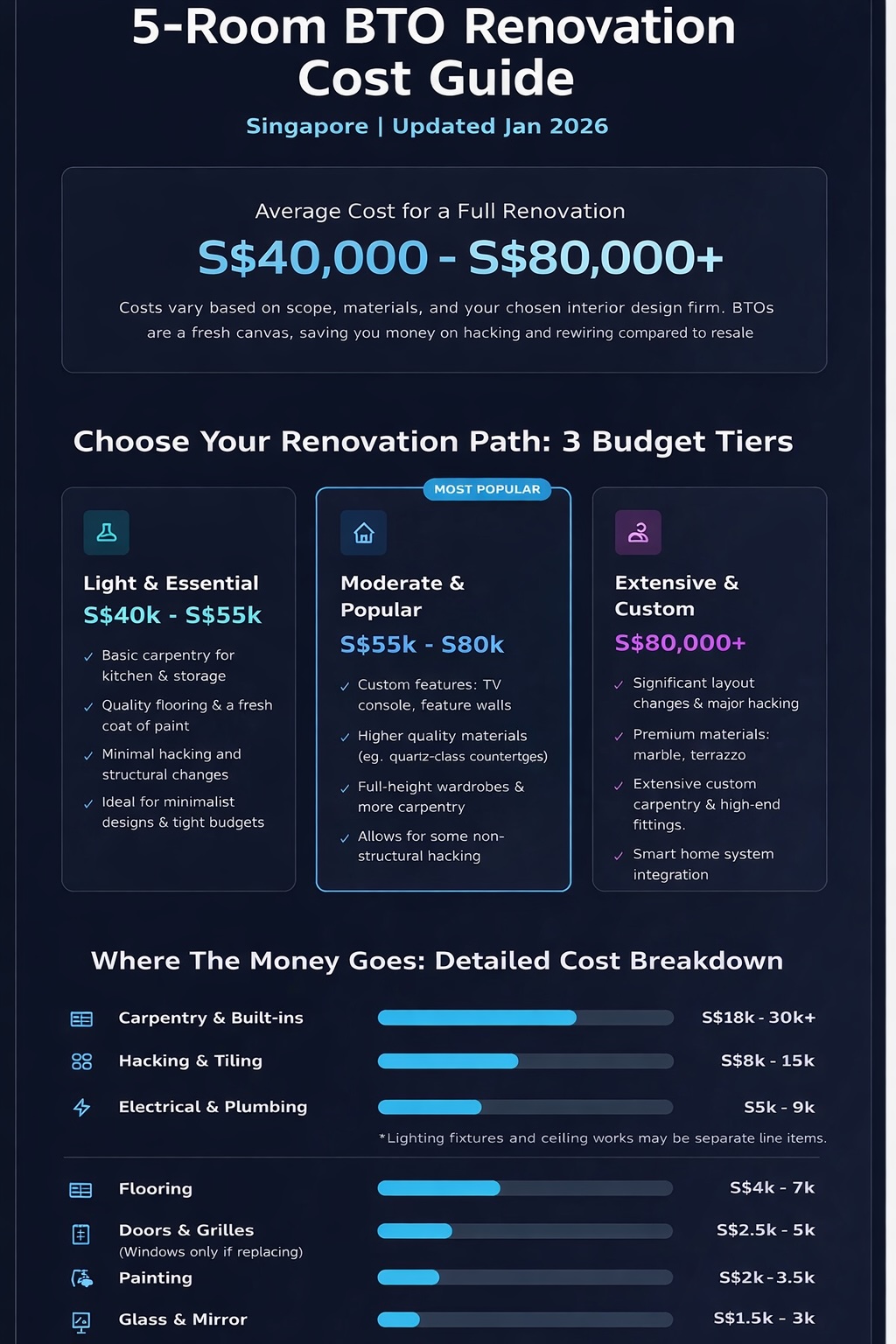
($40,000 - $55,000)
Best for: homeowners who want a clean, functional home fast, without building the entire flat in carpentry.
Ideal for homeowners with a tight budget or a love for minimalist design, this tier covers all the essentials. It focuses on foundational work like basic carpentry for the kitchen and essential storage, a fresh coat of paint, and quality flooring. Costs are kept low by minimising hacking and structural changes, and by making smart use of the fittings provided under HDB's Optional Component Scheme (OCS).
Typically prioritises:
- Practical kitchen cabinets
- Basic flooring (commonly vinyl in living and bedrooms)
- Painting
- Sensible electrical points
- Targeted wardrobes (not necessarily full-height in every room)
Comfortable, “most common” renovation
($55,000 - $80,000)
Best for: homeowners who want the home to feel finished and cohesive, not just done.
This is the most common and balanced approach for new homeowners. This budget allows for more personalisation, including custom-built features like a TV console, a feature wall, or full-height wardrobes in the bedrooms. You can also opt for better quality materials, such as durable quartz countertops and premium laminates. Some non-structural hacking, like creating a semi-open kitchen, fits comfortably within this range.
Typically adds:
- More storage across rooms (often full-height wardrobes)
- TV console or feature element
- Better lighting plan (not necessarily a full false ceiling everywhere)
- Select upgrades in kitchen and bathrooms
Extensive and customised
($80,000+)
Best for: homeowners who already know their lifestyle priorities and are willing to pay for them.
If you're dreaming of a highly customised, magazine-worthy home, this is the tier for you. This budget accommodates significant layout changes, extensive custom carpentry, and the use of premium materials like sintered stone, marble, or terrazzo. It also covers high-end fittings, designer lighting, and the integration of smart home systems for a truly modern and luxurious living experience.
Typically includes:
- More complex carpentry and detailing
- Premium surface materials
- More wet-area work and/or reconfiguration
- More specialised lighting and possibly smart-home integration
Line-by-line cost breakdown (how to read a quote like a homeowner, not a gambler)
Use these sections to compare quotations properly. Different firms label items differently, but the cost centres are consistent.
Carpentry and built-ins ($18,000 - $30,000)
Often the largest component of your budget, carpentry is where your home's personality truly comes to life. This category covers all custom-made furniture, such as kitchen cabinets, full-height wardrobes, the TV console, and any feature walls. The final price is heavily influenced by your choice of materials (e.g., standard laminates vs. premium wood veneers) and is typically calculated on a 'per-foot-run' (PFR) basis, meaning the longer the cabinet or wardrobe, the higher the cost.
Common inclusions:
- Kitchen cabinets, wardrobes, vanity storage, shoe cabinets, TV console, storage walls
- What to demand in writing:
- Material spec (not just “laminate”)
- Hardware and internal fittings level
- Clear inclusions and measurements or module count
Electrical and plumbing ($5,000 - $9,000)
While not the most glamorous part of the renovation, these works are critical for your home's safety and functionality. This budget covers running new electrical wiring for power sockets and lighting points, installing your chosen lights and ceiling fans, and setting up water heaters. On the plumbing side, it includes laying new pipes for sinks, shower mixers, and the kitchen. We strongly advise against cutting corners here; always engage licensed professionals for a safe and reliable setup.
Common inclusions:
- Power points, lighting points, basic electrical works, plumbing connections
- Reality check:
- Wiring may be included, but light fixtures are often excluded.
Wet works (waterproofing, tiling, masonry) ($8,000 - $15,000)
This foundational stage sets the canvas for your new home. It typically includes hacking existing kitchen and bathroom tiles (if you opted out of HDB's OCS), constructing cement bases for cabinets, shower kerbs, and any new partition walls. The costs also cover essential waterproofing, plastering for a smooth finish, and the labour for laying your beautiful new tiles. A key advantage for BTO homeowners is that minimal hacking is usually required, offering significant savings right from the start.
Common inclusions:
- Waterproofing, tiling, kerbs, cement screed, hacking where required
Non-negotiable:
- Waterproofing scope should be explicitly stated for bathrooms and any affected wet zones.
Flooring and painting
Common inclusions:
- Vinyl or tiles (depending on scope), painting works
Tip:
- Small per-square-foot differences add up in a five-room unit.
Here's a general guide to how much they can cost:
- Flooring (Vinyl/Tiles): $4,000 - $7,000 for living areas and all bedrooms.
- Painting (Whole Unit): $2,000 - $3,500, with costs varying based on the brand and type of paint.
- Doors & Windows: $2,500 - $5,000 for replacing doors or installing new window grilles.
- Glass & Mirror Works: $1,500 - $3,000 for items like bathroom shower screens and custom mirrors.
Feeling overwhelmed by the numbers? It’s completely normal. We can help you find an ID for your reno.
Room-by-room budgeting (what most homeowners end up prioritising)
Kitchen
A kitchen is usually one of the most expensive zones because it combines carpentry with plumbing and wet works. If you want to keep budget stable, decide early on:
- Countertop material class
- Whether you need an island or peninsula
- How much storage is truly necessary versus “nice to have”
Living and dining
This is where budgets quietly go sideways because it is the “showpiece” space.
If you need a smarter spend:
- Choose one hero move (lighting, a statement surface, or a single carpentry moment)
- Keep the rest flexible with loose furniture
Bedrooms
Bedroom budgets are storage-led. Full-height wardrobes across multiple rooms can become a major driver of your total renovation cost.
Bathrooms
Bathrooms are expensive to redo properly. If your scope includes re-tiling and waterproofing, plan for it upfront rather than treating it as a “later add-on”.
Smart Savings: How to Reduce Your 5-Room BTO Renovation Cost
Taking control of your renovation budget doesn’t mean sacrificing your dream home. It’s about making savvy, informed decisions that prioritise both quality and long-term value. By understanding where to save and where to invest, you can significantly manage your5-room bto renovation cost singaporewithout compromising on the essentials. This is your guide to building a beautiful and functional home, smartly.
Where to Save: Smart Compromises
Stretch your dollar further by being strategic with your choices. These areas offer great potential for savings without impacting the core quality of your home:
- HDB Optional Component Scheme (OCS): If you haven't opted out, using the basic flooring and internal doors provided by HDB can save you thousands in hacking and installation costs right from the start.
- Loose vs. Built-in Furniture: Limit custom carpentry to essential areas like the kitchen and master wardrobe. Opt for stylish loose furniture for TV consoles and sideboards, which offer more flexibility and are often more affordable.
- Feature Walls: Instead of a costly marble or intricate carpentry feature wall, create a stunning focal point with a bold coat of paint, elegant wallpaper, or trendy and affordable fluted panels.
- Flooring Materials: High-quality vinyl flooring offers the aesthetic of wood at a fraction of the price. It's durable, waterproof, and a practical choice for most areas of the home.
OCS and why it can change your renovation scope
HDB’s Optional Component Scheme (OCS) lets buyers opt in for HDB to install items such as sanitary fittings, internal doors, and floor finishes. What’s offered can vary by flat/project and the buying context.
How to use OCS strategically:
- If you are comfortable with what’s provided, design around it and reduce hacking.
- If you already know you will replace key finishes, budget for the additional works and time.
Where to Splurge: Non-Negotiable Investments
Some things are worth paying more for upfront to avoid costly headaches in the long run. These are the non-negotiables for a lasting, quality home:
- Electrical & Plumbing: Concealed wiring and pipes are difficult and expensive to fix later. Always engage licensed professionals and use quality materials for safety and reliability.
- Kitchen Essentials: Invest in a durable countertop like quartz and high-quality hardware (e.g., Blum or Hafele hinges and runners) for your cabinets. These high-touch surfaces need to withstand daily use.
- Key Furniture: Don’t skimp on items you use daily for comfort and health, such as your mattress, sofa, and ergonomic work chair.
- A Trusted Interior Designer: A reliable ID is an investment in peace of mind. A seasoned professional prevents costly mistakes and ensures a quality finish. Finding the right firm is crucial, and SIXiDES can connect you with verified designers to protect your investment.
Hidden costs that inflate the final number (because they sit outside the renovation quote)
One of the biggest anxieties for any homeowner is the fear of the final bill exceeding the initial quotation. The truth is, the first number you see is often just for the core construction and carpentry work. To get a realistic picture of your final 5-room bto renovation cost singapore, it’s crucial to understand what is typically left out. For complete peace of mind, we strongly recommend setting aside a contingency fund of 10-15% of your renovation budget to handle any unforeseen issues or desired changes along the way.
Common exclusions to confirm early:
- Air-conditioning and installation
- Appliances (hob, hood, oven, fridge, washer)
- Curtains, blinds, window film
- Light fittings, fans, decorative fixtures (often excluded even when wiring is included)
- Bathroom accessories and mirrors
- Post-renovation cleaning or chemical wash
- Haulage and debris disposal fees
GST check:
Singapore’s current GST rate is 9%. Always confirm whether the quote is inclusive or exclusive of GST before you compare.
Timeline planning: the HDB rule BTO owners need to know
For newly completed blocks, HDB states that approved renovations must be completed within 3 months from the date of the permit. This matters because it influences how ambitious your scope can be, and how disciplined your procurement needs to be.
Practical implications:
- Confirm lead times for carpentry, countertops, and key fixtures before you start hacking.
- Avoid late variation orders that blow both cost and schedule.
- Plan deliveries so they do not clash with site readiness.
Interior designer vs contractor: compare deliverables, not stereotypes
A contractor typically executes agreed works. An interior designer may also cover space planning, drawings, trade coordination, sequencing, site supervision, and defect management.
How to compare fairly:
- Scope clarity: Are materials, sizes, and inclusions specified, or vaguely described?
- Project management: Who coordinates trades and timeline?
- Quality control: How are defects handled and what aftercare is promised in writing?
This is not about who is “cheaper”. It is about who is reducing your risk.
Renovation loans: what you can typically borrow in Singapore
Renovation loans commonly cap borrowing at up to six times monthly income or S$30,000, whichever is lower, subject to approval. DBS states this clearly for its renovation loan.
Two homeowner reminders:
- Renovation loans usually have restrictions on what can be paid for, so confirm what qualifies.
- Keep repayments realistic. Your monthly expenses often rise after you move in.
How to compare renovation quotes properly (so you don’t get fooled by a low headline number)
Demand itemisation
If it is not itemised, you are not comparing quotes. You are comparing vibes.
Check carpentry specifications properly
Look for:
- Clear inclusions
- Material specification
- Hardware and internal fitting level
Confirm wet works scope in writing
Look for:
- Waterproofing steps and affected areas
- Tiling scope and coverage
- Plumbing inclusions
Verify electrical points and fixtures
Confirm:
- Number of points
- Whether fixtures are included or excluded
- Any add-on costs for changes after confirmation
Read the exclusions list like it is the main plot
The exclusions list is where your “$60k renovation” quietly becomes “$78k after moving in”.
The Importance of a Detailed Contract
Your best defence against unexpected expenses is a clear and comprehensive contract. Before signing, ensure the document is itemised, specifying the exact materials, dimensions, and finishes for all works. It should also clearly outline the project timeline, a detailed payment schedule, and the company's policy on variation orders (any additions or changes made after the contract is signed).
Working with a reliable professional is key to a transparent and stress-free renovation journey. Connect with SIXIDES' verified IDs for transparent and detailed quotes.
Q&A (FAQ section)
Is $40,000 enough for a 5-room BTO renovation in Singapore?
It can be, if you keep hacking minimal, control carpentry, and prioritise essentials over built-ins. The moment you add full-height wardrobes across multiple rooms, more wet works, and feature elements, budgets typically rise into the ranges cited by mainstream cost guides.
What usually costs the most in a 5-room BTO renovation?
Carpentry is often the biggest driver, followed by wet works (kitchen and bathrooms), then electrical and lighting planning. Cost guides that break down renovation components repeatedly flag carpentry and masonry as key budget drivers.
What is one HDB rule that can affect my renovation plan?
For newly completed blocks, HDB states approved renovations must be completed within 3 months from the date of the permit. Plan your scope and lead times accordingly.
Should I ask if GST is included in the quote?
Yes. GST is 9%, and you should compare quotes on the same basis (all inclusive, or all exclusive) so you are not misled by a lower-looking headline number.
Does OCS help reduce renovation costs?
OCS can reduce the need for hacking and shorten the move-in timeline if you are comfortable with the provided sanitary fittings, internal doors, or floor finishes. Whether that translates into savings depends on what you would otherwise replace.